
Autonomous High-Throughput Materials Experimentation

Yong Xiang1,3,*, Xiaokun Zhang1,2, Xiehang Chen3, Shipai Song3, Wenyang Lu2
1 University of Electronic Science and Technology of China, Chengdu, 611731, China;
2 Suzhou Laboratory, Suzhou, 215000, China;
3 Tianfu Jiangxi Laboratory, Chengdu, 641619, China
ABSTRACT: Autonomous high-throughput materials experimentation is crucial to materials genome engineering (MGE), which enables materials R&D paradigm shift from conventional trial-and-error approaches towards data and knowledge driven materials AI strategies. MGE integrates high-throughput computation, high-throughput experimentation, materials data, and data standards & protocols, which establishes an efficient and closed-loop pipeline from materials design and development to manufacturing and application, significantly accelerating the whole process. Recent progress of highthroughput materials experimentation technologies will be reported. For instrumentation, integrated high-throughput fabrication (e.g., combination material libraries) and high-throughput characterization (e.g., scanning electrochemical microscopy) platforms enable efficient and precise mapping of composition-structure-property-performance correlation and support the acquisition of large-scale, systematic, and high-quality materials data. For enabling AI technologies, automated robotic experimentation platforms have been developed to replace repetitive labor forces, and large language models have been adopted to enhance intellectual design and analysis capabilities. Closed-loop "design-execution-evaluation-optimization" workflows have been widely developed to facilitate fully autonomous experimentation. The future trend will be materials AI agents driven autonomous high-throughput materials experimentation powered by AI-ready digital twin models, with autonomous planning, discovery, and optimization of the experimental process. Eventually, such AI materials super scientists, which may completely overtake the intuitive capabilities of human experts, will fundamentally reshape the landscape of materials R&D, leading to the materials industry revolution.
KEYWORDS: Materials Genome Engineering; High-Throughput Experimentation; Autonomous Experimentation; DataDriven Materials R&D; Materials AI Agent.
Brief Introduction of Speaker
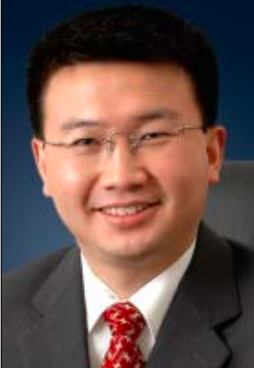
Yong Xiang

Yong Xiang has been a professor at the University of Electronic Science and Technology of China (UESTC) since 2009. Prior to joining UESTC, he was a Senior Engineer and Project Manager at Intel Corporation, Santa Clara, CA from 2005 to 2009. He received his Bachelor's degree from the University of Science and Technology of China in 2000, and Master's and Ph.D. degrees from Harvard University in 2001 and 2005, respectively. His research focuses on materials genomics, molecular devices, flexible sensors, solid state batteries, and distributed energy systems. He has published more than 300 articles and filed over 100 patents, some of which have been commercialized successfully. He also received the Science and Technology Advancement Awards from Sichuan Province twice, The First Class in 2022 and The Second Class in 2017.