
ALKEMIE: High-throughput and Autonomous Computing Platform

Zhimei Sun*
Beihang University, Beijing 100191, China
ABSTRACT: TThe integration of high-throughput computing and artificial intelligence has been recognized as a transformative approach in modern materials design. Constructing a collaborative platform integrating high-throughput computing, databases, specialized software and machine learning technologies will accelerate the development of new paradigms in material design. To address the growing demand for automation and scalability, a high-throughput autonomous computing platform, we have developed the visualized high-throughput automatic computing platform ALKEMIE (Artificial Learning and Knowledge Enhanced Materials Informatics Engineering). Designed with the principles of Automation–Modularity–Database–Intelligence–Visualization (AMDIV), ALKEMIE enables a fully automated and intelligent computational ecosystem encompassing task configuration, job scheduling, and result analysis. ALKEMIE v1.0 adopts a client-server architecture and integrates multiple computing software of different scales in a modular way, and enables the entire process from structure construction, modelling, running to data analysis to be carried out automatically without any human intervention. It enables high-throughput automatic error-correction and supports concurrent high-throughput automatic computing simulations for no less than 104 users. Within ALKEMIE v2.0, a drag-and-drop workflow editor based on ReactFlow has been implemented, allowing complex computational processes to be constructed rapidly through an intuitive graphical interface. Through the adoption of a server–client architecture and a WebSocket-based real-time communication mechanism, multi-user concurrent access and instant job status updates are supported. As a result, system responsiveness and user interaction efficiency have been significantly enhanced. The next-generation user interface (UI) and user experience (UX) have been optimized to allow direct file access, improved caching performance, and automatic visualization of results, enabling real-time display of energy profiles, band structures, and density of states within the browser.Furthermore, AIassisted workflow generation have been incorporated. Computational nodes can be intelligently recommended, input files can be automatically generated, and task monitoring and data parsing can be carried out autonomously. This integration achieves a seamless workflow from task submission to result interpretation. The modular plugin architecture of ALKEMIE has been designed to be compatible with mainstream materials simulation software such as VASP and Quantum ESPRESSO, ensuring openness, extensibility, and interoperability.Through extensive deployment and testing, significant improvements in highthroughput materials screening efficiency and AI-driven materials discovery speed are achieved. The ALKEMIE platform has been demonstrated to provide robust technological support for the development of autonomous and controllable materials computing infrastructures, marking a substantial step toward intelligent materials design ecosystems.
KEYWORDS: High-throughput computation; Autonomous computing platform; Artificial intelligence; Materials design
Brief Introduction of Speaker
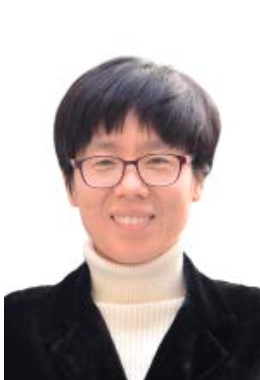
Zhimei Sun

Dr.Zhimei Sun is currently a Cheung Kong Scholar Chair Professor at School of Materials Science and Engineering of Beihang University, China. She received her Ph.D. of Materials Science from Institute of Metal Research (CAS) in 2002, and after which she worked as a postdoc researcher successively at RWTH Aachen University (Germany) and Uppsala University (Sweden) from 2002 to 2007, as a full professor at Xiamen University (China) from 2007 to 2013, and since August 2013, she joined the faculty of Beihang University. Her research includes computational materials science, phase-change memory materials, high-performance structural materials and 2D transition metal carbides/borides. She has published over 300 SCI papers and has been ranked in the Most Cited Chinese Researchers by Scopus in the past five years.